
G-Switch Timing Guide: When to Flip, Why the Crossing Is Always the Same Length, and How to Stop Falling Behind
Published · 1 min read
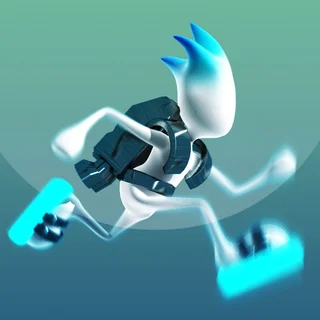
There is no jump
New players treat the flip like a jump and press it as if the runner needed a run-up. It does not work that way. When you flip, gravity reverses and the runner falls straight across to the other rail, keeping the same forward speed. There is no arc and no way to shorten or lengthen the crossing: its length is set by how far apart the two rails are at that moment. So the only decision is when the crossing begins, and the right moment is almost always the last step of the rail you are on.
Where to look
Your runner is pinned to the left third of the screen, and everything that will kill you enters from the right. Watch the incoming track, not the runner. A good habit is to name each obstacle as it appears — gap, step, wall — and decide the flip for it before the previous one has been dealt with. If you are reacting to the obstacle under your feet you are already a flip behind.
The two ways runs end
The first is dropping into a gap because the flip came late: fix that by flipping on the last piece of rail rather than after it. The second is being scrolled off the left edge. That happens when a bad landing puts you on a rail that dead-ends, and the safe rail is on the other side. The fix is counter-intuitive: flip immediately, even if the landing is ugly, because a runner in the air is still moving forward and a runner on a dead-end rail is not.
Endless mode
Endless generates track faster than the story levels do, and the rail spacing changes. Spend the first hundred metres of every run learning that day's spacing, and only then start pushing the flips later. Your best distance is kept between rounds.
More from the blog
- G-Switch Multiplayer: Six People, One Keyboard, and the Rules That Keep It Civil
How the 2–6 player race is set up, which keys to give whom, and why the player in front is usually the first one out.
- G-Switch 1, 2 and 3: What Changed in Each Game and Which One to Play
All three G-Switch games are on this site. The original is the purest, the second adds curves and eight players, the third is the most polished — here is how to pick.